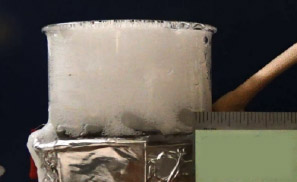
Foam characteristics of F3s are assessed to determine whether they produce stable foams to block oxygen from the fuel
Challenge
Growing supply chain constraints and regulatory pressures have made the continued use of aqueous film-forming foam (AFFF) untenable. Yet, replacing AFFF is widely regarded as the greatest challenge in the firefighting community in half a century. The application of per- and polyfluoroalkyl surfactants (PFAS) to firefighting foams enabled AFFF to far-exceed the performance of prior foam technologies, and AFFF performance has been steadily improved over the decades since.
Solution
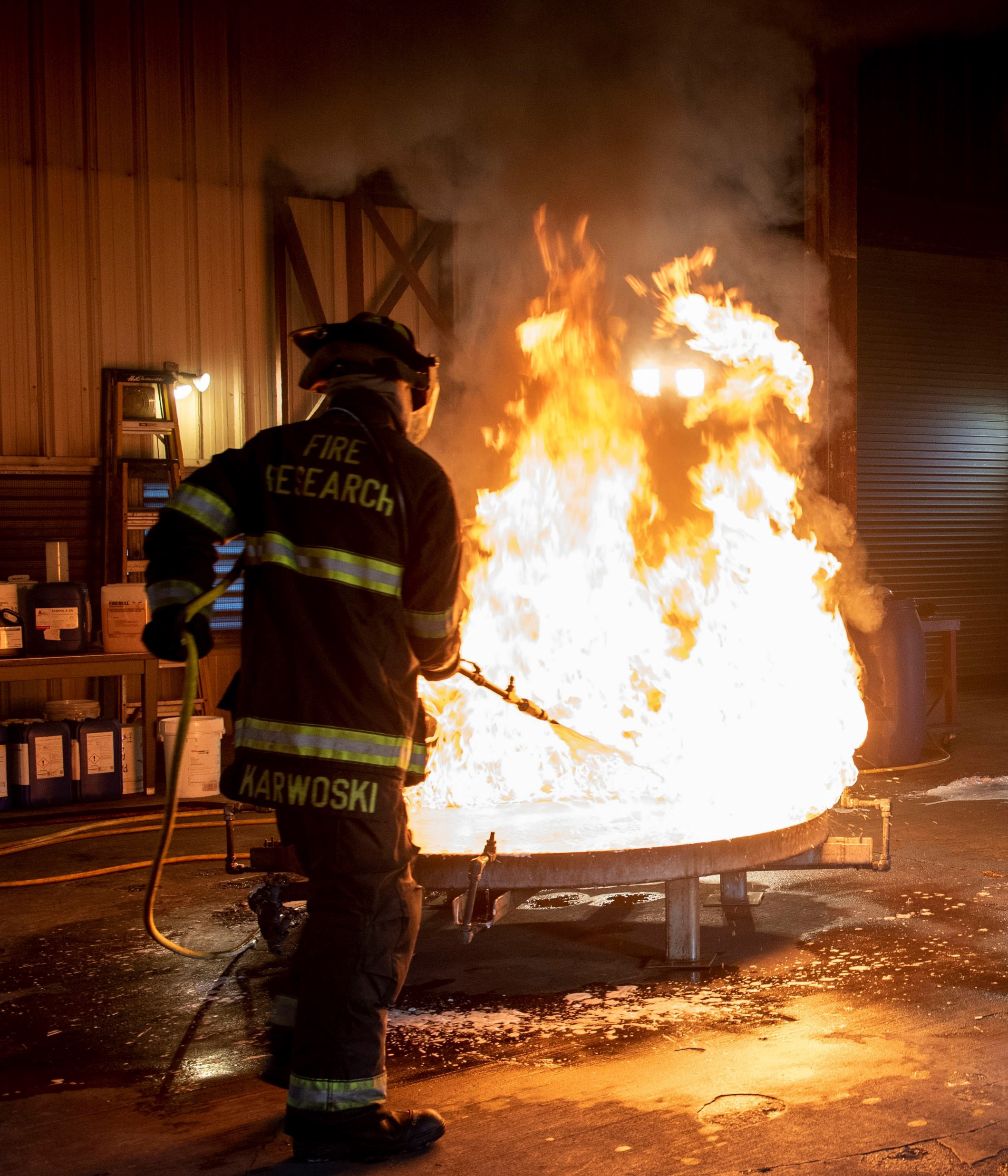
MIL-SPEC 28 ft^2 extinguishment tests on burning fuels at the Naval Research Laboratory to identify F3s that meet requirements.
Beginning in 2018, SERDP and ESTCP accelerated the development of viable PFAS-free alternatives by integrating research, testing, and validation into a focused, end-to-end effort. SERDP defined the ideal performance traits for next-generation foams, evaluated of hundreds of candidate formulations, and advanced the most promising commercial products through targeted laboratory refinement, while establishing toxicity thresholds to ensure safe use.
ESTCP then demonstrated and validated the leading candidates at operational scale, proving that large scale (1000 gal and >5000 ft2) fuel fires can be controlled in adequate time using F3 with handlines and aircraft rescue and firefighting (ARFF) trucks. These efforts also established best practices for field use and validated safety.
These results enabled ESTCP, in collaboration with the U.S. Navy, to deliver a new military specification by January 2023 for F3s (MIL-PRF-32725), creating a clear pathway for procurement and widespread adoption.
Impact
- Delivered a compliant solution on an accelerated timeline, with the first product qualified to MIL-PRF-32725 in September 2023, meeting National Defense Authorization Act (NDAA) requirements to have a commercially available product by October 1, 2023.
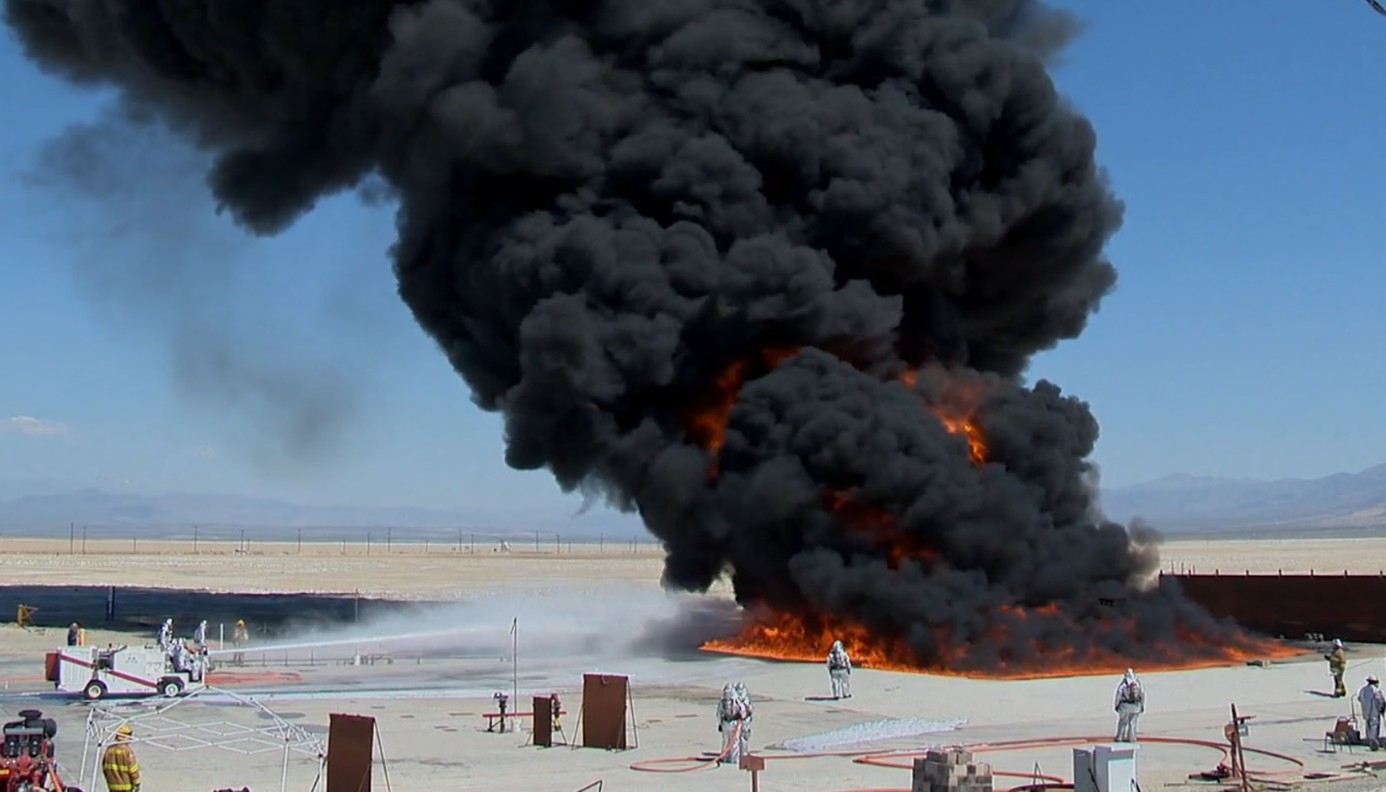
Firefighting tests at China Lake Naval Weapons Center to demonstrate and validate F3s on large scale fires and running fuel fires.
- Established a viable and growing market for F3, with multiple qualified products now available and continued improvements in firefighting performance across successive formulations.
- Enabled rapid transition across the Department of War (DoW), including all Navy ground locations, most Air Force locations, and select Army locations.
- Extended impact beyond DoW through close partnership with the FAA, supporting the transition of many FAA certified airports across the U.S. from AFFF to F3.
- Demonstrated effectiveness during a Februrary 2025 aircraft incident at Toronto Pearson international Airport, contributing to the safe evacuation of all 80 passengers and crew.
- Limited further increases to DoW’s costly PFAS clean-up obligation while reducing exposure to hazardous chemicals for Servicemembers, their families, and surrounding communities.